
Digital Assets & Blockchain
Infrastructure first. Noise never.
We study digital assets as networks, markets and machines, not as slogans.

Understanding the machinery comes before any opinion about the market.
Digital assets are a body of new financial and computing infrastructure. Our interest lies in how these networks reach consensus, how their economics work, how value is secured and moved, and where durable enterprises can be built around them.
We publish no addresses, balances, strategies or treasury information. What follows describes areas of understanding and interest only.
Explained
How the machinery works
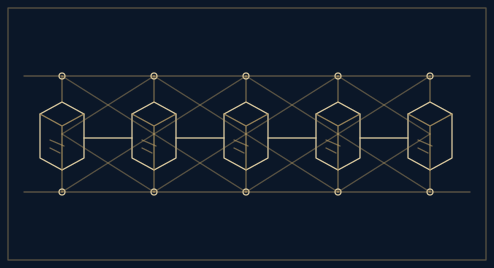
Four simplified diagrams of the mechanisms we study. They illustrate principles and do not describe any position or strategy of the office.
Our perspective
Principles we apply
Bitcoin and mining
Proof-of-work security, hash rate, difficulty, energy sourcing, hardware cycles and the economics of subsidy and fees.
Custody and markets
Key management, segregation, counterparty risk, liquidity and venue selection, with custody treated as a first-order risk.
Solana
High-throughput consensus, stake-weighted leader schedules, validator operations, delegation and network participation.
Ethereum and smart contracts
Execution environments, rollup design, contract security and the settlement layer for on-chain finance.
DeFi and on-chain markets
Lending, exchange and derivatives protocols, with attention to smart contract risk, oracle risk and liquidity depth.
MEV and execution
The ordering of transactions, builder and searcher markets, and how execution design shapes fairness and cost.
Tokenization
Representing real-world assets on chain, with legal structure and custody determining what a token truly confers.
Research
Emerging protocols, cryptography and scaling work, studied carefully before any commitment is considered.